
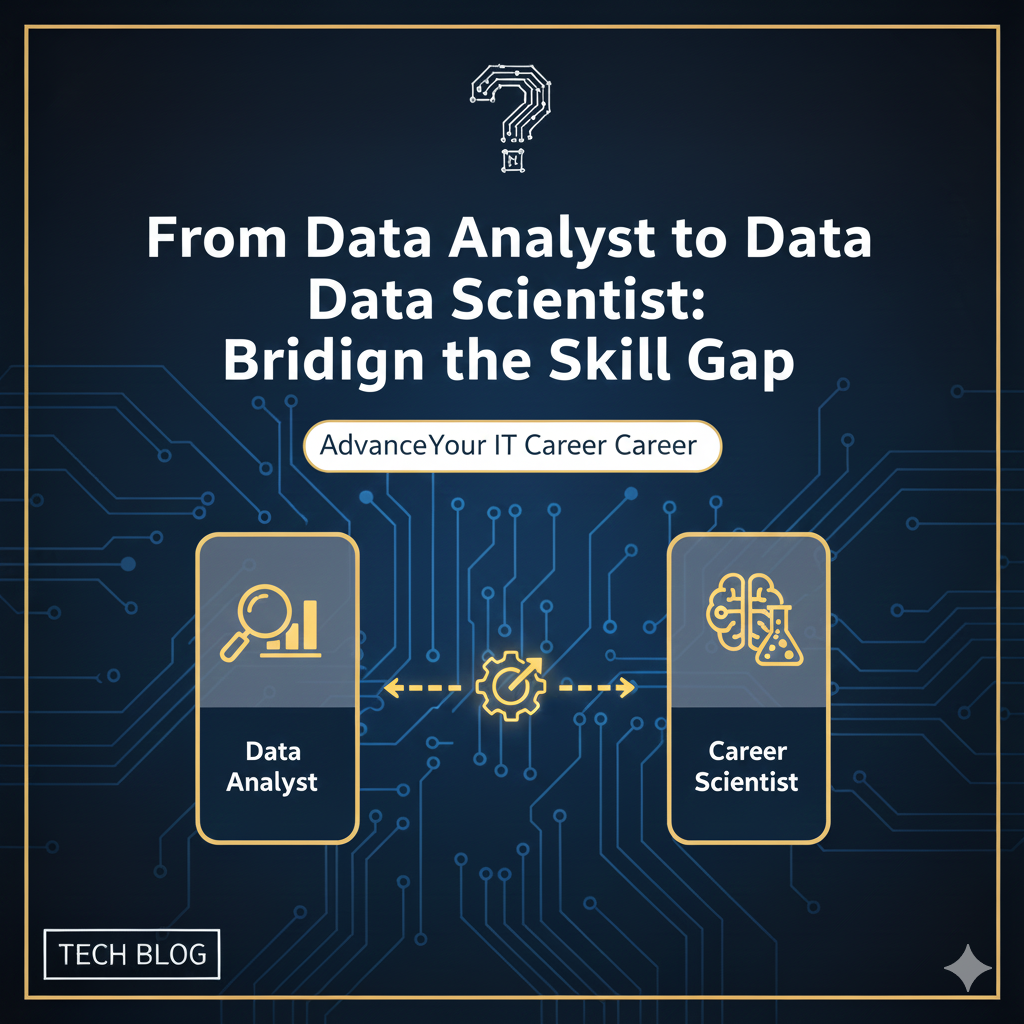
In today’s data-driven world, the roles of Data Analyst and Data Scientist are often confused, but they represent two distinct levels of engagement with data. Many professionals begin their journey as a Data Analyst, establishing a foundational understanding of business operations and data structures. This role is crucial for keeping the organizational pulse, relying heavily on tools like Microsoft Excel for quick insights and SQL for retrieving and manipulating data from relational databases. Analysts excel at reporting on past performance, answering the “what happened” question, and delivering key performance indicator (KPI) dashboards through Business Intelligence (BI) platforms.
The Analyst: Reporting and Visualization
The primary focus of a Data Analyst is to deliver clarity on historical data. They utilize techniques such as descriptive statistics, data aggregation, and compelling data visualization to summarize trends and anomalies. An analyst’s output is typically a report or a dashboard that helps management understand the current state of the business—for example, analyzing last quarter’s sales figures or identifying the most effective marketing channels post-hoc. Their strength lies in visualization and storytelling with data, often communicating findings directly to stakeholders and helping them make data-informed operational decisions.
The Scientist: Predicting and Prescribing Action
The leap to a Data Scientist is a significant career evolution, marking the transition from merely reporting to predicting and prescribing action. This role moves beyond “what happened” and “why it happened” to answer the far more valuable questions: “What will happen next?” and “What should we do about it?”
This shift is rooted in the mastery of advanced algorithms, statistical modeling, and Machine Learning (ML). A Data Scientist’s toolkit is fundamentally different, centered on robust programming environments like Python (using libraries such as Pandas, NumPy, and scikit-learn) or R. They are responsible for developing complex models—the mathematical engines that can forecast future trends, classify new data points, and optimize business processes.
Bridging the Gap: Mastering Tools and Techniques
To successfully bridge this gap, aspiring Data Scientists must focus their development on three key areas:
-
Programming Proficiency: A deep understanding of Python or R is non-negotiable. This goes beyond simple scripting; it requires the ability to write efficient, scalable code for data manipulation, cleaning, and model building on massive, often messy, datasets.
-
Statistical Depth: While analysts use basic statistics, scientists must dive deep into inferential statistics, probability theory, and experimental design. Concepts like p-values, confidence intervals, A/B testing, and hypothesis testing are the bedrock of reliable predictive modeling.
-
Machine Learning Mastery: The core of the Data Scientist role is expertise in ML models. This includes foundational algorithms like Linear Regression for forecasting continuous values and Classification algorithms (like Logistic Regression, Decision Trees, and Support Vector Machines) for categorizing outcomes. The journey culminates in exploring more sophisticated models like Ensemble Methods (Random Forests, Gradient Boosting) and Neural Networks for deep learning applications. Understanding how these models work, how to tune their hyperparameters, and how to interpret their results (model explainability) is paramount.
Elevate Your Career with Focused Learning
The transition isn’t just about accumulating certificates; it’s about demonstrating the practical ability to transform raw data into a competitive advantage. Our comprehensive Data Science course is designed precisely for this high-value career switch. We emphasize practical application, guiding you through real-world projects that demand the ability to clean massive, diverse datasets, build highly accurate predictive models, and, crucially, communicate complex findings—including the limitations and ethical implications of your models—to both technical peers and non-technical stakeholders.